

How do you know a 340B consulting company can actually protect your program?
The right 340B audit consultant understands your type of covered entity, knows common HRSA audit findings, and works with the systems and people you already have. The wrong one may deliver a generic report without addressing the gaps that put your program at risk.
That difference matters because 340B operations involve several responsibilities. Patient eligibility, contract pharmacy oversight, TPA data, and manufacturer policies all need attention. Even with a consultant or TPA involved, the covered entity remains responsible for program compliance.
So, look beyond a company’s service list. Consider the experience of the people handling your account, how they address your program’s challenges, and the support they provide after the initial assessment. Here are six factors to consider when choosing a 340B consulting company.
6 Factors to Consider When Choosing a 340B Consulting Company
The right 340B consulting company should understand your program’s needs, identify compliance and operational risks, and offer practical ways to address them. Evaluate potential partners against these six factors before deciding.
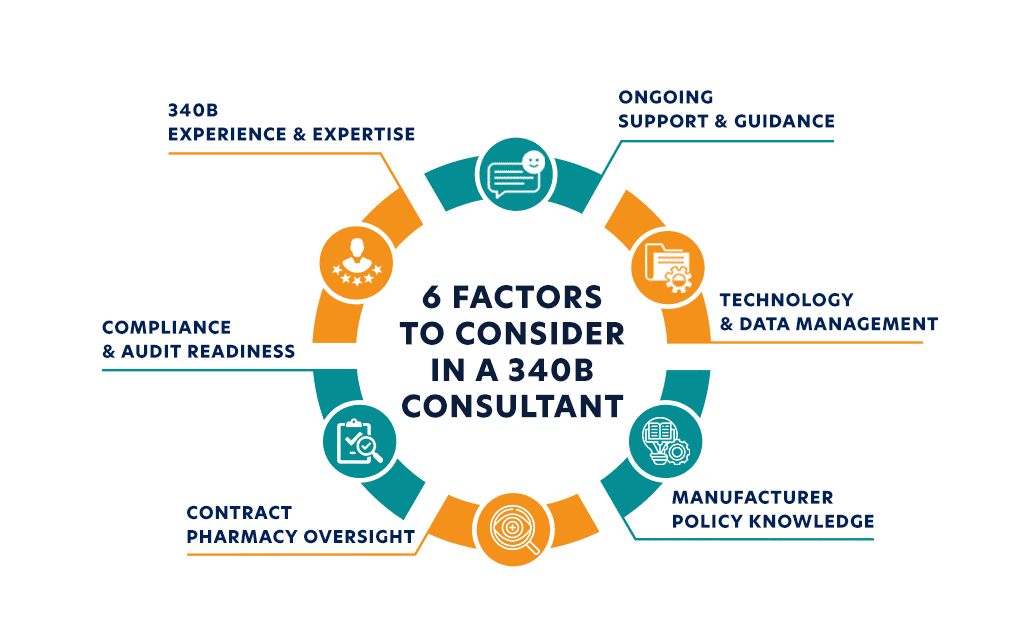
1. 340B Program Experience and Expertise
General knowledge of 340B requirements is not enough. Hospitals and federally qualified health centers operate under different program structures and requirements. You want a team that has worked with covered entities like yours and understands the challenges that come with your program model.
The company’s 340B consulting services can also give you a better idea of the areas it supports and the expertise it brings to the engagement.
Consider:
- Assigned team: Who will manage your account, and what is their direct 340B experience?
- Relevant experience: Have they worked with your type of covered entity and pharmacy model?
- Practical expertise: Can they show how they’ve helped other programs address real challenges?
2. Compliance and HRSA Audit Readiness
Compliance affects almost every part of daily 340B operations, including patient eligibility, diversion prevention, duplicate discount prevention, and recordkeeping. HRSA audits show how frequently compliance issues arise.
HRSA’s fiscal year 2025 audit results list 176 audits so far. The most common findings involve inaccurate information in HRSA’s 340B database (OPAIS), duplicate discounts related to Medicaid Exclusion File errors, and diversion.
A 340B audit consultant should know how to assess these areas, identify compliance gaps, and help your team address them before they lead to audit findings. Look for a company that can:
- Identify documentation gaps and compliance risks.
- Help prepare for HRSA audits and develop corrective action plans.
- Review policies, procedures, transaction records, and internal controls.
- Recommend ongoing monitoring instead of focusing only on audit preparation.
3. Contract Pharmacy and TPA Management
Contract pharmacy arrangements involve several parties, connected data flows, and shared responsibilities. Your consultant should understand how covered entities, pharmacies, and third-party administrators (TPAs) work together. Just as importantly, they should know where gaps can occur.
Assess its ability to:
- Reconcile purchasing, dispensing, and claims data.
- Review contract pharmacy agreements and related processes.
- Strengthen pharmacy oversight and supporting documentation.
- Identify discrepancies that may affect compliance or program performance.
Remember that outsourcing these activities does not transfer your responsibility for 340B compliance. Even with a TPA in place, your team needs to review the data, monitor performance, and address concerns.
4. Manufacturer Policy and 340B ESP Knowledge
Manufacturer policies can affect contract pharmacy arrangements, claims data submissions, and daily workflows. Requirements can vary by manufacturer and change over time. Your consulting partner should help your team understand these changes and decide what adjustments may be needed.
Look for experience with:
- Manufacturer-specific policies and contract pharmacy restrictions.
- Assessing how policy changes affect existing pharmacy arrangements.
- Communicating updates and recommending practical operational adjustments.
- 340B ESP claims data submissions and contract pharmacy designation workflows.
It’s also important for the consultant to distinguish manufacturer policies from federal 340B requirements. This helps your team understand which obligations come from the program itself and which apply under specific manufacturer policies.
5. Technology and Data Management Capabilities
Reliable data helps you monitor program performance, reconcile transactions, and identify compliance issues early. Your consultant should understand the systems supporting your 340B operations and how data moves between them.
Evaluate its ability to:
- Identify data gaps and integration challenges.
- Improve reporting, reconciliation, and program visibility.
- Work with your existing EHR, pharmacy systems, and TPA platforms.
- Explain data access requirements and safeguards for sensitive information.
You don’t necessarily need a 340B consulting company with the most advanced technology. What matters is its ability to work with your existing systems and use your data to improve oversight and decision-making.
6. Ongoing Support and Operational Guidance
A consulting engagement should strengthen your team’s ability to oversee the program over time. Before signing an agreement, find out what support continues after the initial assessment or implementation.
Ask what the company offers in terms of:
- Staff training: Practical guidance that builds internal knowledge.
- Compliance monitoring: Periodic reviews and guidance on emerging risks.
- Issue resolution: Support for operational questions and compliance concerns.
- Knowledge transfer: Documented recommendations, updated procedures, and clear handover plans.
- Program and policy updates: Timely communication about relevant 340B requirements and manufacturer policy changes.
A strong consulting relationship should leave your team better equipped to manage day-to-day responsibilities and address issues as they arise.
Questions to Ask Before Hiring a 340B Consultant
You’ve reviewed the company’s experience and services. Now it’s time to understand how it actually works with covered entities. A few direct questions can help you see what the engagement will involve and what your team can expect.
- What types of 340B programs have you supported?
- Have you worked with covered entities similar to ours?
- How do you assess program compliance and identify operational gaps?
- What does your HRSA audit preparation and corrective action process involve?
- How do you coordinate with our internal team, TPA, and contract pharmacies?
- What data access do you require, and how do you protect sensitive information?
- How do you monitor manufacturer policy changes and help covered entities respond to contract pharmacy restrictions and claims data requirements?
- What deliverables, staff training, and ongoing support are included in your engagement?
Pay attention to how the company responds. Clear answers, relevant examples, and a strong understanding of your organization’s challenges can tell you a lot about the working relationship you can expect.
Finding the Right Fit for Your 340B Program
A reliable 340B consulting company understands your program’s structure, recognizes its compliance risks, and works with your team to address operational challenges. Look beyond the services it offers and consider the experience behind them, how it approaches problems, and the support it provides over time.
A clear scope, defined deliverables, and regular progress updates also help you understand what the engagement covers and how its value will be measured.
NorthArc Health supports covered entities with 340B program assessments, compliance reviews, and operational guidance. If your organization needs consulting support, talk to our team to identify your program’s needs and address priorities alongside your existing TPA and staff.
Frequently Asked Questions (FAQs)
How much does a 340B consulting company cost?
The cost depends on your program’s size, complexity, and the services required. A one-time program assessment will generally cost less than ongoing compliance support or full program management. Ask for a clear scope, pricing structure, and list of deliverables before signing an agreement.
Can a consultant guarantee a clean HRSA audit?
No. A consultant cannot guarantee a clean HRSA audit. However, an experienced consultant can help identify compliance gaps, review documentation, strengthen internal controls, and prepare your team for an audit. The covered entity remains responsible for meeting 340B program requirements.
When should a covered entity hire a 340B consultant?
A covered entity can benefit from consulting support when launching or expanding its 340B program, preparing for an HRSA audit, adding contract pharmacies, addressing compliance concerns, or reviewing program performance. A consultant can also provide ongoing guidance as program requirements and manufacturer policies change.
What should a covered entity expect from a 340B consulting engagement?
Expect clear communication, agreed timelines, and transparency about the work being performed. A 340B consulting company should explain who is responsible for each task, how findings will be shared, and how progress will be tracked. You should also know what happens when the engagement ends and what support remains available to your team.